Canada is betting big on LNG at a time when global demand for the product is softening and costs keep ballooning. But in the game of LNG development, not everyone faces the same risks, or even plays by the same rules.
Promoters pitch glossy visions of economic growth, while selling before project risks materialize. Developers earn fees while shouldering limited long-term exposure. Banks collect interest and receive priority payments. Meanwhile, equity holders – like Indigenous partners and pensions – carry the brunt of financial risk.
Promoters of the projects often have shady track records: firms with no operational projects, companies tied to environmental destruction, or those implicated in corruption scandals. Their goal isn’t to build a viable project but to attract investors and find an exit.
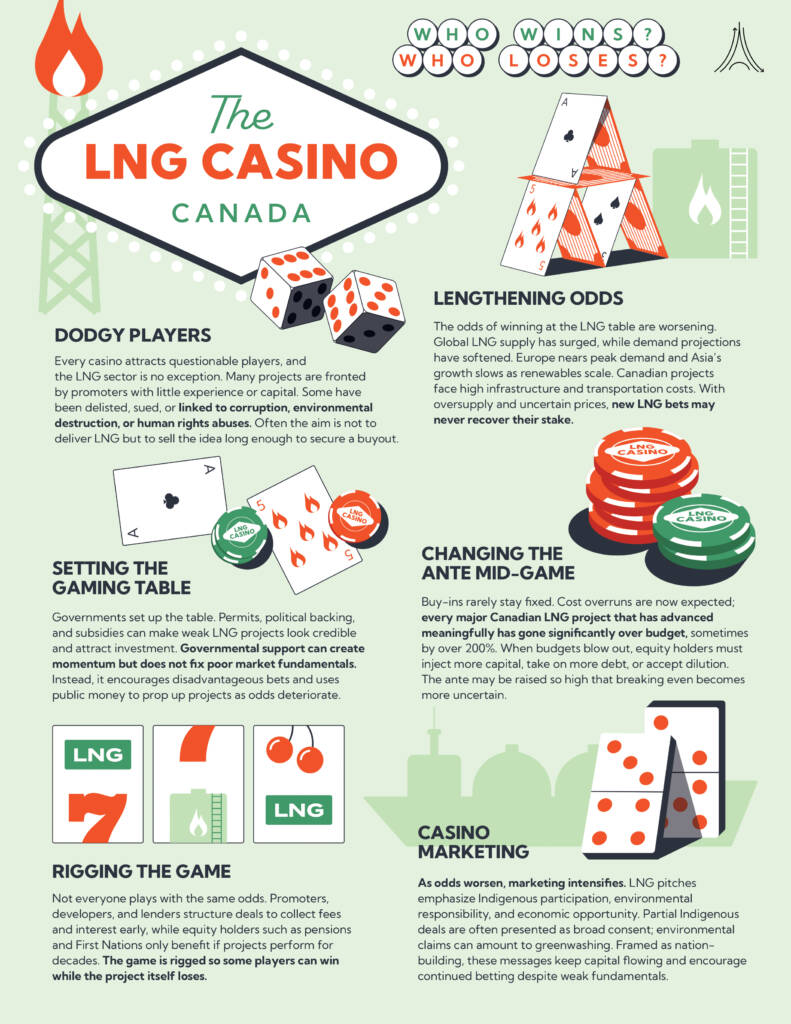
And for equity investors, the odds get worse as the game goes on. Across Canada, LNG projects have consistently gone over budget. Pipelines and terminals frequently double initial cost estimates, while global oversupply and weakening demand threaten returns. Offtake agreements, once a key tool to manage risk, are shortening and increasingly tied to volatile spot prices. Environmental and social challenges like flaring, community opposition, and Indigenous rights conflicts add further uncertainty.
The result is an industry that resembles a casino more than a reliable pillar of economic security. While promoters, developers, and lenders may walk away with profits regardless of outcomes, equity investors bear the losses.
The question for potential investors is clear: before placing your bet, know the odds and recognize who truly pays when the house wins.